An elevator is often perceived as a one-time investment expected to operate seamlessly for decades. In reality, like any complex machinery subject to operational wear and tear, an elevator has a specific service life, after which it must be decommissioned or replaced.
According to the industry’s “golden rule,” the average lifespan of an elevator ranges from 20 to 25 years. However, a deeper look reveals that this figure is primarily used for long-term financial planning and is seldom based on a rigid manufacturer’s guarantee.
The actual longevity depends on numerous complex variables: from the building’s purpose to the technology of the specific model. An experienced elevator company will explain during the design phase that the operational lifespan is highly individual—in many cases, it is a manageable process where the owner’s proper maintenance and care play a decisive role.
Passenger Elevators
With correct maintenance, traditional passenger elevators (hydraulic or standard traction systems) can realistically and safely serve for 20-25 years. However, technological progress in the last decade has had an unexpected impact on operational lifespans. Modern, space-saving Machine Room-Less (MRL) models often have shorter life cycles. It is generally considered optimal to replace such models after 10-15 years.
The primary reason for this reduced lifespan is “electronic obsolescence.” While older models relied on durable steel components (guide rails, cabs, counterweights), today’s systems are dependent on complex microcircuits. While the mechanics might function for 40 years (though not recommended), control units and Variable Frequency Drives (VFD) become obsolete in 6-7 years, much like computers.
Consequently, a modern passenger elevator requires expensive system modernization much sooner. The cause is often not physical wear, but the lack of available software or the cessation of technical support by the manufacturer.
Freight Elevators
Elevator models designed for industrial facilities are generally more robust than passenger elevators. Manufacturers anticipate that these units will face harsher treatment and heavier loads; thus, they are equipped with reinforced steel walls and heavy-duty flooring from the outset.
Under proper operating conditions, a high-quality freight elevator can serve for 25 to 30 years, with a high probability of exceeding this mark. However, units failing within 5-10 years are not uncommon, which is almost always a result of improper usage.
The main cause of premature system failure is disregarding the Loading Class. When installing a freight elevator, it is imperative to select a model corresponding to the intended load—choosing a lower class to save costs is ultimately counterproductive, as it necessitates much earlier replacement.
Class A: General freight loading, where no single item exceeds 25% of the elevator’s capacity.
Class B: Specifically designed for motor vehicle loading, and in some cases, other loads of similar dimensions.
Class C: Industrial-scale loading, divided into C1, C2, and C3 clusters. Designed for the massive concentrated loads of forklifts or industrial trucks.
Hospital Elevators
In medical facilities, the elevator is a part of the critical infrastructure facing immense pressure. Theoretically, a hospital elevator’s lifespan is estimated at 20-25 years, similar to passenger models, but they often require replacement much sooner. These systems are designed for continuous operation—24 hours a day, 7 days a week.
In large hospitals, an elevator completes more cycles in 10 years than a standard passenger elevator does in 25. Therefore, wear is measured by operational intensity rather than calendar years.
Furthermore, precision and compliance in the medical sector are monitored with extreme rigor. A functioning hospital elevator must achieve perfect leveling at દરેક floor to ensure the seamless movement of stretchers and wheelchairs. Even a minor discrepancy poses a risk to patients. Modernization or replacement in medical facilities is often necessary before the end of the operational term due to new regulations, such as the integration of “Code Blue” (emergency medical mode) functions or antibacterial surfaces—features that older models lack.
Dumbwaiters (Service Elevators)
The small freight elevator, or Dumbwaiter, is an essential element for the smooth operation of restaurants, hotels, and occasionally hospitals. Its main enemy is “cyclic fatigue.” Hundreds of short trips per day and a constant “start-stop” regime lead to “fatigue”—rapid wear of the motor and cables. Consequently, their average life expectancy is shorter—approximately 15-20 years.
The first signs that a dumbwaiter is failing are increased noise and vibration. Since these elevators often come into contact with food, their proper functioning is directly linked to high hygiene standards; debris falling into the hoistway often causes mechanical jamming. For a dumbwaiter to serve long-term, deep cleaning and regular lubrication are critically important.
Elevators for Persons with Disabilities
The range of elevators intended for accessible environments is broad, and their durability varies accordingly. Simple Stairlifts have the shortest life cycle—7-10 years. Their mechanisms are often exposed and thus vulnerable to environmental conditions (dust, precipitation, etc.). Vertical Platform Lifts (VPL) are more durable, lasting between 15-25 years.
However, this type of vertical transport is most frequently updated due to legislative changes. Safety standards (such as ADA or the European EN 81 series) are periodically tightened. It is possible for an elevator for PWDs to be technically sound yet require decommissioning because it no longer meets updated regulations. In this sector, modernization is often a forced step to ensure legal compliance.
Panoramic Elevators
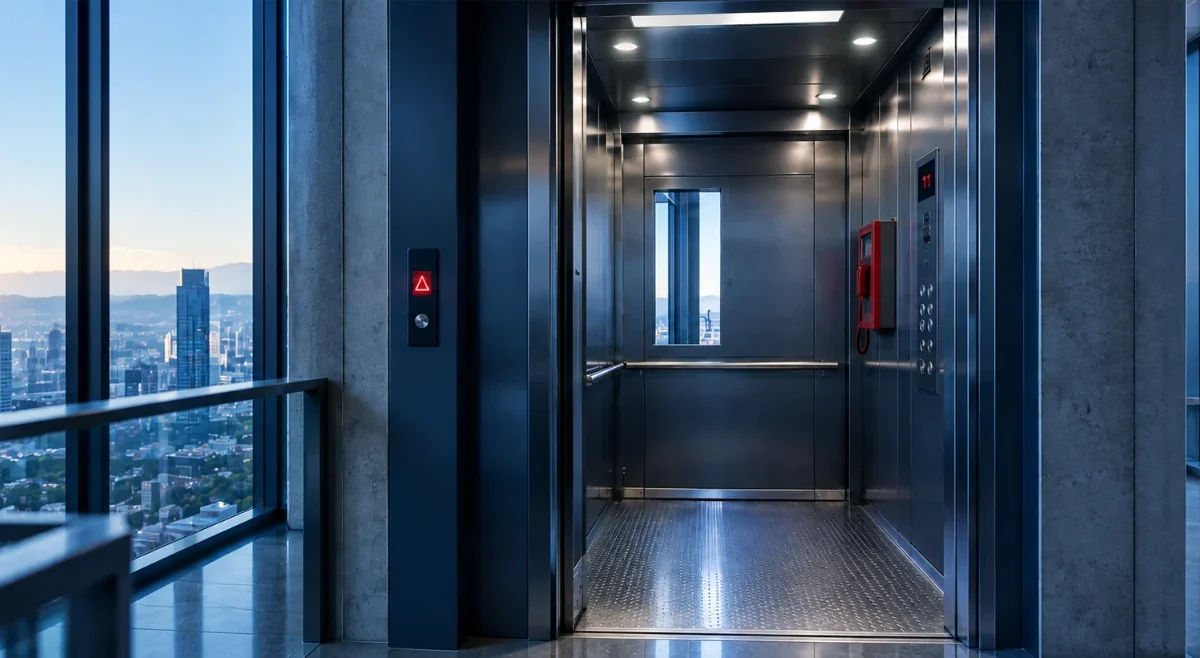
The Panoramic elevator is an atypical case. Because they serve both functional and aesthetic purposes, their viability is assessed by two criteria: system integrity and visual appearance. While mechanical parts typically last 20-25 years without issues, the visual and aesthetic appeal often loses relevance within 10-15 years.
The mechanism of a panoramic elevator also faces risks that do not affect standard passenger elevators—for instance, direct sunlight on glass cabins creates a “greenhouse effect.” This dries out lubricants much faster, requiring more frequent inspections. Additionally, the greenhouse effect poses a threat of overheating for the electronics.
Ultimately, the main driver for long-term intervention is the need for visual renewal. A worn, scratched, or corroded panoramic elevator loses its primary function—creating a “wow” effect for passengers. Therefore, updates are often dictated by aesthetic-marketing requirements rather than mechanical failures.
The Decisive Factor: Maintenance vs. Repair
In most cases, an elevator’s operational lifespan is a relative concept. Research confirms that proper maintenance has the greatest impact on the reliability of vertical transport systems. Well-maintained elevators serve buildings for 20-25 years, whereas poor maintenance, according to existing statistics, reduces the asset’s life by an average of 10-15 years.
There are two primary strategies for elevator upkeep: reactive and proactive. The reactive approach (waiting until something breaks) may seem cheaper at first glance, but it facilitates premature wear and reduces overall service life. In contrast, planned professional elevator service involves constant monitoring and resolving issues at an early stage. This approach includes scheduled component replacement and regular cleaning, which extends operational timelines and reduces long-term expenditures.