In modern architecture, increasing attention is being paid to the design of the elevator cabin. Particularly during the development of commercial property projects, specifications for colors, lighting, and materials are considered alongside rigid engineering and safety standards.
The elevator cabin is often the specific area of a building where a visitor lingers first and last; therefore, it can have a major impact on their overall impression—potentially creating a negative mood before a visit even begins or spoiling a positive experience built up throughout their stay.
Consequently, commercial property owners today approach elevator design with the same meticulous care as they do other, more massive elements of the building’s interior.
An elevator cabin design must meet specific compliance standards. For instance, the cabin is constructed upon a structural “functional platform” defined by code. Any competent elevator company executes this process in strict accordance with safety regulations. These typically include the American ASME A17.1 or the European EN 81 series standards (companies in Georgia usually guide their operations by the EN 81 series). Materials, ventilation systems, emergency lighting arrays, and other components must be selected in full alignment with these regulations. The development of an customized interior visual identity begins only after the requirements prescribed by the legislative framework and technical standards are fully satisfied.
What Aspects Determine Psychological Comfort in an Elevator Cabin?
The interior of an elevator serves a practical purpose—selecting the right design plays a critical role in managing passenger psychology and mood.
An elevator cabin is an enclosed, small-scale space, which frequently triggers discomfort or anxiety for a significant number of people. The primary objective during design is to alleviate this sensation and transform the ride into a pleasant experience.
For example, studies demonstrate that harsh, “hospital-grade” fluorescent illumination induces stress, whereas soft, indirect lighting integrated along the ceiling perimeter induces calm. Furthermore, such lighting offers an additional spatial effect—it visually expands the space.
Mirrors serve the exact same purpose—they represent a time-tested, effective technique for creating an optical illusion that makes a small, enclosed footprint appear more spacious and open. Acoustics and tactile material perception are equally important. The acoustic feedback of pushing a button, the smoothness of the cabin’s travel, and even the ambient temperature of the materials subconsciously influence the passenger’s perception of safety.
Typological Differences: How Cabin Design Varies by Elevator Application
Not all elevator cabins are engineered using the same formula. Ultimately, the visual identity of the final product is dictated by its core functional application.
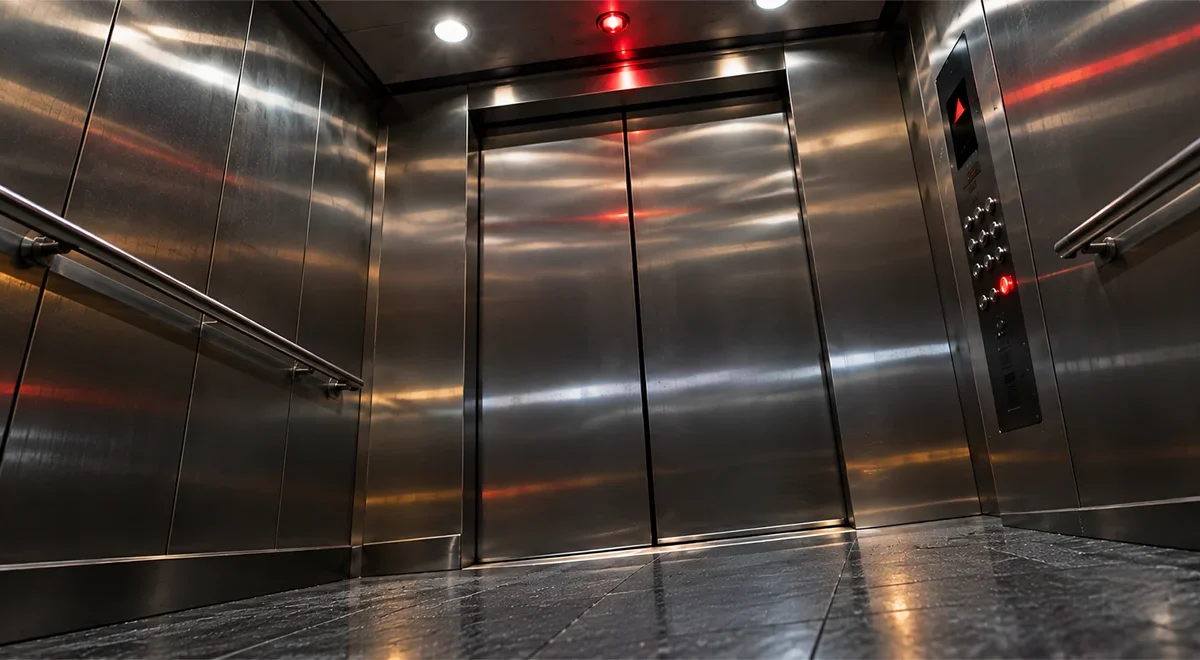
Standard Passenger Elevators (Residential & Office Buildings): Here, the design objective is to balance a durable and aesthetically pleasing interior with a moderate budget. Stainless steel and High-Pressure Laminates (HPL) are frequently utilized, as these materials withstand the wear and tear of high-frequency daily use and are easy to maintain. Minimalist design is highly popular—on one hand, clean lines and minimal elements reduce visual noise to maximize passenger comfort, while on the other hand, a lack of eclectic and highly custom details allows for the creation of budget-friendly options.
Industrial Freight Elevators: For these systems, aesthetics carry no weight whatsoever—the primary criteria are the correct structural Classes of Loading and robust cabin integrity. You will not find mirrors in these cabins; the design is completely utilitarian. The walls are constructed from thick gauge structural steel, and the flooring consists of checkered diamond plate steel designed to endure substantial weight and heavy impacts.
Hospital (Stretcher) Elevators: A similar utilitarian approach applies to medical facilities. How the cabin looks is secondary to optimal functionality. The cabin must be sized generously enough to accommodate a patient on a stretcher along with accompanying medical equipment and personnel (typically requiring dimensions of at least 1200×2300 mm or more, depending on the specific standard). Surfaces must feature antimicrobial coatings, and the ventilation system must be equipped with HEPA filters and UV-C air purification systems. In premium, high-status medical centers, attention may be paid to cabin aesthetics—such as cladding walls with warmer tones and utilizing softer lighting—but these are generally custom-ordered design details that represent the exception rather than the standard.
Custom-Designed Elevator Cabins: How Does Pricing Compare to Standard Models?
The financial impact depends entirely on the materials selected by the engineer and designer during cabin planning. If heavy materials, such as natural stone cladding or thick glass panels, are utilized, the total deadweight of the cabin increases. A heavier cabin demands a more powerful drive motor, thicker hoist ropes, and a high-capacity braking system. Consequently, aesthetic decisions directly dictate secondary engineering costs.
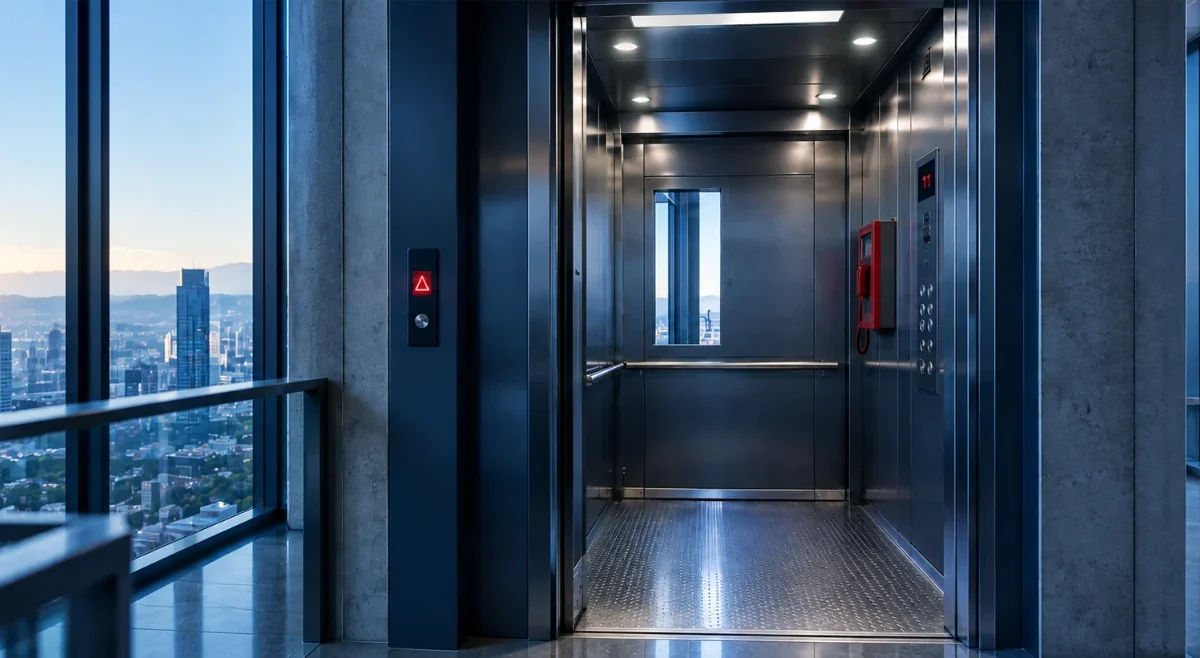
The most premium category is the panoramic (observation) elevator. In these systems, glass serves both a decorative and structural function. This requires specialized tempered and laminated safety glass capable of withstanding dynamic structural loads, wind pressures, and sharp temperature fluctuations.
Another prominent 21st-century trend in elevator design is sustainability and environmental efficiency. Clients increasingly request recycled materials, bamboo finishes, and energy-efficient LED lighting arrays. Utilizing lightweight composite materials reduces the total weight of the cabin, which in turn lowers power consumption. However, outfitting an elevator cabin with these advanced materials increases the initial capital expenditure, and they are not universally compatible with every elevator type.