Elevator inspection is a critically important procedure for the safe operation of modern buildings. The technical inspection process is complex and multifaceted. It is not merely a formal check but a detailed technical analysis that ensures the long-term, stable functioning of systems and, consequently, the daily safety of passengers.
Today, as the construction sector in Georgia develops rapidly and more high-rise buildings emerge, elevator safety is more important than ever. Elevator Company CLC Elevator pays special attention to the issues of quality and safety. Operating in the Georgian market since 2018, the company ensures that customers have access to high-quality products at affordable prices.
However, product quality is unfortunately only a good foundation and not a 100% guarantee of safety. Therefore, periodic elevator inspection is a vital preventive measure. Without regular checks, it is impossible to detect potential problems at an early stage and eliminate them in a timely manner.
It is also crucial that certified elevators are installed during construction. In accordance with modern standards and regulations, elevator certification is not only a technical but also a legal obligation. The process includes a detailed inspection of mechanical components and electrical systems, ensuring the proper operation of every component and compliance with modern safety standards.
Key Obligations of the Elevator Owner
The elevator owner bears significant responsibilities that must be fulfilled to ensure passenger safety and the proper functioning of the equipment. CLC Elevator provides a detailed overview of these core obligations.
Ensuring Periodic Technical Inspection
According to Georgian legislation, mandatory elevator inspection is the responsibility of the owner. The owner must ensure that an inspection is conducted at least every three year. During this process, all critical components of the elevator must be inspected in detail, safety systems must be tested, and the technical condition must be assessed. The inspection must be carried out by an accredited inspection body.
Elevator Registration
It is also mandatory to register the elevator in the agency’s departmental registry. The owner must ensure registration before commissioning and update the registration data in case of any subsequent changes. The registry must reflect the technical characteristics of the elevator, its location, manufacturer, and other vital information.
Elevator Maintenance
It is essential that the elevator receives continuous service from qualified personnel. The owner must hire specialists with appropriate expertise or sign a contract with a specialized company (such as CLC Elevator) to provide regular technical maintenance. This includes preventive checks, necessary repair works, and the timely elimination of malfunctions. Hired personnel must hold relevant certifications.
Documentation
The owner is also responsible for the elevator’s technical maintenance and inspection documentation, which should detail the work performed, identified defects, and methods of rectification. This documentation serves as evidence of proper elevator upkeep and is used, if necessary, to resolve various legal or technical issues.
Elevator Inspection Procedure
Technical inspection of elevators is a complex process strictly regulated by legislative norms. Only specially accredited inspection bodies that meet rigorous professional standards and possess the relevant technical competence have the right to perform these inspections.
The inspection process begins with a detailed review of the elevator’s technical documentation. Inspectors analyze the elevator passport, installation documentation, and the technical maintenance log. In the next stage, the elevator undergoes a physical inspection, involving the measurement and testing of technical parameters. Particular attention is paid to the integrity of safety systems—emergency brakes, door locking mechanisms, overspeed governors, and other critical components are checked.
During the inspection, the condition of the motor, the degree of rope wear, the accuracy of the cabin movement (leveling), and other important parameters are also verified. Each measurement and test is carried out using specialized calibrated instruments to ensure maximum accuracy. Installation quality is decisive in many ways—this is why CLC Elevator collaborates only with experienced professionals and uses modern, high-standard equipment.
Upon successfully meeting elevator safety standards, the accredited body issues a Technical Inspection Certificate. This document confirms that the elevator fully complies with safety requirements and its operation is permitted. The certificate specifies the date of inspection and the deadline for the next check. If defects are identified, the owner is given a reasonable timeframe to rectify them, followed by a re-inspection.
Elevator Registration Process
Before starting the technical inspection process, proper registration is mandatory.
First, the elevator owner or an authorized person must submit an application to the Technical and Construction Supervision Agency. The application must contain detailed information regarding the elevator’s location, the owner, and the operating conditions. It is crucial that the application is fully completed and accompanied by all necessary supporting documents.
The elevator passport and technical specifications documentation constitute the second major component of the registration process. The passport must detail the technical parameters, date of manufacture, the manufacturing company, and other significant characteristics. If the elevator is new and being registered for the first time, certificates of conformity issued by the manufacturer must be submitted.
(On a practical note: If you sign a contract with CLC Elevator, we provide the passport detailing these specifics. Whether you are purchasing a passenger elevator, a freight elevator, or a hospital lift—from the Japanese brand FUJISJ to GiantKONE, a subsidiary of the Finnish KONE—providing the core information is our responsibility. Given that different types of elevators require different technical data, partnering with a reliable company is crucial for a smooth registration process).
If the registration is a renewal, documentation confirming previous inspection results, identified defects, and their rectification must be submitted.
Safety Requirements
Elevator safety standards require strict adherence to regulations and regular supervision.
Continuous control of safety systems requires the implementation of automatic monitoring systems. Modern elevators installed by CLC Elevator are equipped with multi-level safety mechanisms, including emergency stop systems, overload sensors, and door safety mechanisms. Specialized elevators for persons with disabilities (PWD) are typically equipped with additional safety features tailored to potential passengers with special needs.
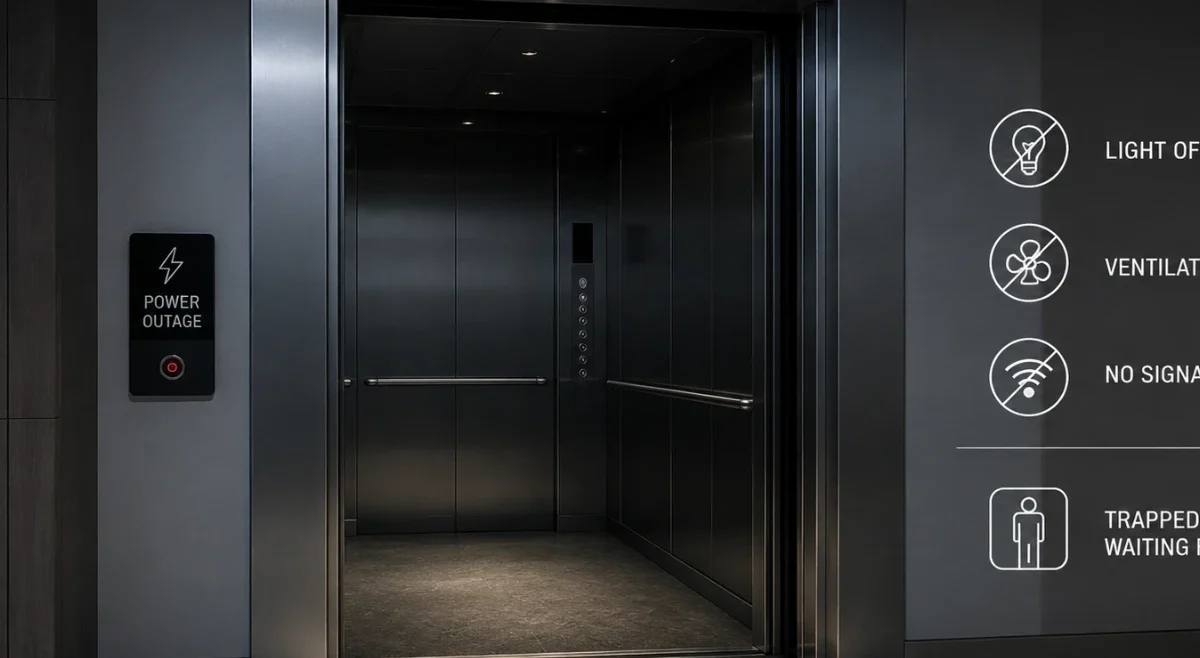
The Emergency Response Plan is a critical document. It must include detailed instructions for various types of emergency situations, including power outages, fires, or technical malfunctions.
Passenger safety instructions must be posted in a visible location, both inside the elevator cabin and on each floor. Instructions must be clear, easy to understand, and include information on maximum load capacity, the use of the emergency call button, and actions to take in emergencies. Special attention should be paid to instructions intended for persons with special needs.
Legal Regulations
In Georgia, technical regulations for elevators are strictly defined by law.
The “Product Safety and Free Circulation Code” is the fundamental legislative act defining the principles of supervision and control for elevators as objects of increased technical danger. The Code establishes accreditation requirements for inspection bodies and their core operational directions, which CLC Elevator strictly follows.
The Government of Georgia Decree #289, “Technical Regulation on Elevator Safety,” details the technical parameters of elevators, including safety system characteristics, load capacity, speed, and other significant technical indicators.
The annexes of the law detail the core requirements for the design and production of elevators and safety components, the types of safety components, and final examinations (Annex 4 and 5, respectively), as well as various types of product quality assurance (including complex assurance, full assurance, production quality assurance, etc.).
The experienced professionals at CLC Elevator constantly monitor these regulations to ensure full compliance. It is noteworthy that all aforementioned regulations are subject to periodic updates to align with modern technological requirements and international safety standards. CLC Elevator, leading the Georgian market since 2018, continuously tracks these changes to ensure correct practical implementation.
Violation of these regulations leads to strict sanctions, which may include administrative fines as well as criminal liability in cases of serious violations. Therefore, it is essential for all interested parties to deeply study and strictly adhere to the existing legal framework.
Consequences of Violations
Violations identified during technical inspections of elevators carry significant legal and financial consequences. Legislation strictly regulates this matter as it concerns human safety.
The imposition of an administrative fine is the primary sanction upon the discovery of violations. The amount of the fine depends on the severity of the violation. In the case of repeated violations, the fine amount doubles. Importantly, paying the fine does not exempt the owner from the obligation to rectify the violations. Specific amounts for various categories are detailed in Article 42.7 of the Product Safety and Free Circulation Code.
In cases of particularly serious violations, the immediate suspension and sealing of the elevator take place. This measure is considered extreme and is applied only when there is a direct threat to the life and health of passengers. Opening and operating a sealed elevator is prohibited until all violations are fully rectified.
Following the discovery of violations, a mandatory re-inspection must be conducted. The owner must ensure the rectification of all identified defects and invite the inspection body for a follow-up check. The costs of the re-inspection are covered by the elevator owner.
If an accident occurs and it is determined that the incident was caused by a technical malfunction or a breach of safety norms, the owner faces both administrative and criminal liability. In such cases, the victim may also demand compensation for material and moral damages.
Elevator owners (and other responsible parties) should remember that taking preventive measures and performing regular technical maintenance is far more cost-effective than dealing with sanctions imposed due to violations—not to mention the potential human cost of possible accidents. As part of its maintenance services, CLC Elevator also offers a full package of professional inspection support to ensure the safe and efficient functioning of your elevators.