The elevator is one of the most frequently utilized spaces in any building. CLC’s extensive experience demonstrates that this specific area often receives the least attention in terms of upkeep, even though elevator cleanliness is directly tied to the health and well-being of its passengers.
Buttons, doors, mirrors—these surfaces are touched daily by dozens, and in high-traffic buildings, hundreds of people. Bacteria and viruses accumulate rapidly on these touchpoints. Furthermore, an elevator cabin is a confined space with limited natural ventilation, which helps sustain pathogens. Unfortunately, this combination of high-touch surfaces and restricted airflow transforms the elevator into one of the most favorable environments for the transmission of bacteria and viruses.
Understanding the Differences: Cleaning, Disinfection, and Sanitization
These terms refer to three completely distinct processes that complement one another, though none can act as a substitute for another:
Cleaning: This process removes visible dirt, dust, and debris from surfaces, but it does not fully eliminate viruses and bacteria.
Disinfection: This stage utilizes specialized chemical agents to deactivate or kill pathogens on contact.
Sanitization (Sanitizing): This step reduces the remaining microbial load to a standard, legally safe, and harmless threshold.
Skipping any phase or altering this sequence turns the entire servicing process into a nominal, ineffective procedure.
Which Parts of the Elevator Require Specialized Attention?
An elevator cabin may appear structurally simple from the outside, but it contains numerous hard-to-reach zones. These areas are often the most vulnerable to contamination.
Moving Components and Tracks: Over time, dust accumulations penetrate the moving parts of the elevator, leading to mechanical and technical complications. Proper upkeep begins with thorough vacuuming before any chemical treatments are applied.
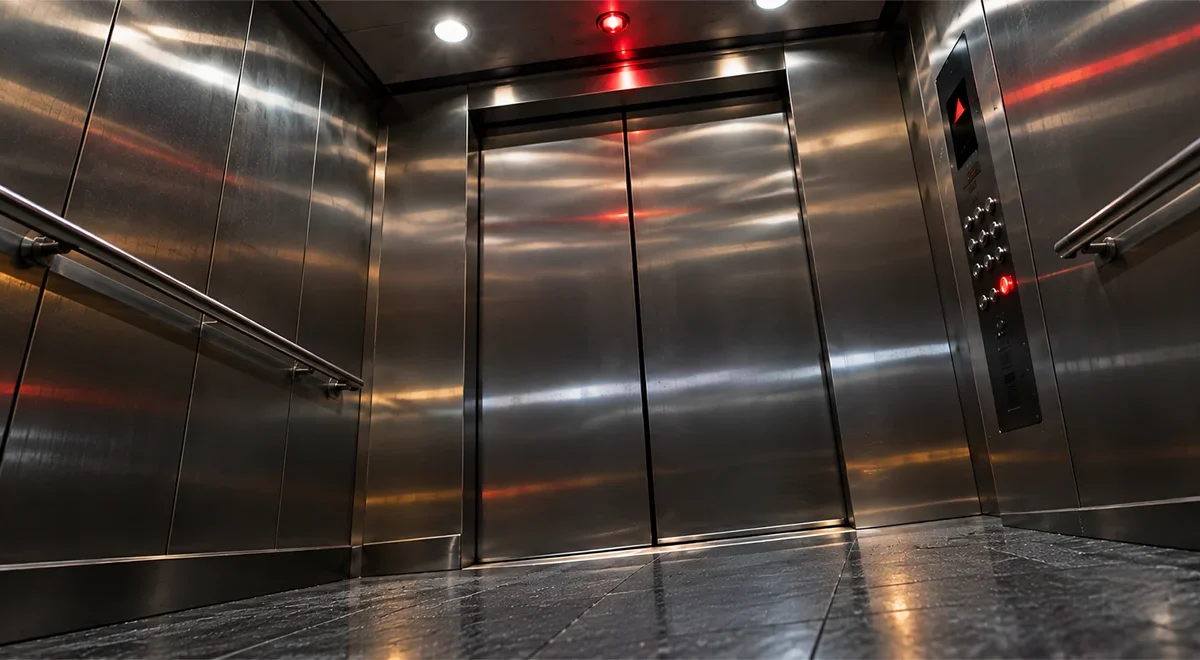
Doors and Walls: In commercial elevators, these surfaces are predominantly constructed from stainless steel. While this material is highly durable, it requires tailored care. When treating these surfaces, it is vital to exclude cleaning products with strong, pungent odors, as scents linger for a prolonged period within a confined cabin.
Control Buttons (The Interface): Buttons are the absolute highest-touch elements in an elevator. Spraying liquid disinfectants directly onto the button panel is one of the most common maintenance errors. The fluid easily penetrates the panel’s electronics, damaging internal circuits. When sanitizing buttons, antibacterial agents must always be applied to a microfiber cloth first—never sprayed directly onto the hardware.
The Elevator Pit: The pit is the least visible part of the system, yet it is where heavy debris, dust, and occasionally pests accumulate. Cleaning the elevator pit is strictly prohibited without a certified technician. This procedure requires a complete system shutdown and formal lockout protocols to guarantee safety.
Recommended Chemistry vs. Strictly Prohibited Substrates
A 70% alcohol solution stands as the most effective and justified choice for treating the majority of elevator surfaces.
Conversely, a wet sponge is completely useless, as it transforms into a breeding ground for bacterial colonies rather than cleaning the surface. Bleaching agents and harsh chlorines degrade polycarbonate elements, and the resulting micro-fissures create new, stubborn breeding zones for pathogens. Under any circumstances, use exclusively microfiber cloths or single-use paper towels.
How Frequent Should the Service Be?
The ideal operational interval depends heavily on building typology and daily foot traffic:
Commercial Malls and Medical Facilities: Where passenger density is exceptionally high, daily disinfection is fully justified.
Corporate Offices and Residential Complexes: A schedule of two to three times a week is generally sufficient to maintain safety standards.
CLC Elevator: Comprehensive, Full-Cycle Service
CLC Elevator integrates elevator service into a complete cycle—ranging from initial engineering and installation to routine daily upkeep. Our team possesses specialized expertise in managing every functional zone of an elevator system. In the event of any operational or technical glitch, our technical specialists are available 24/7.