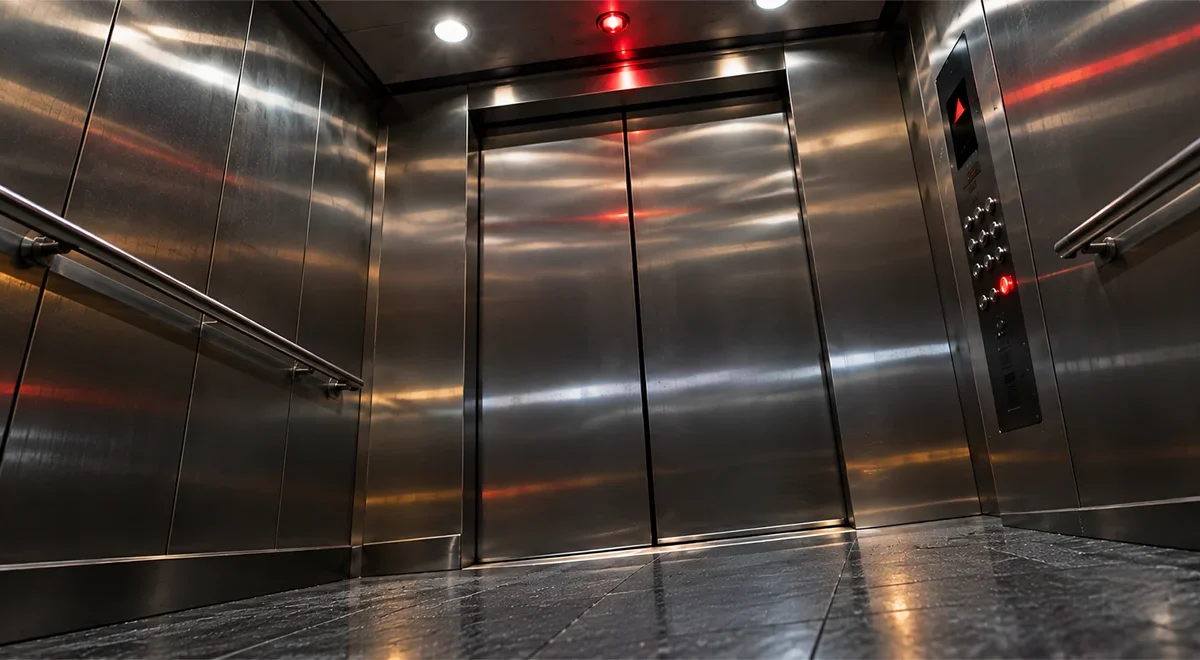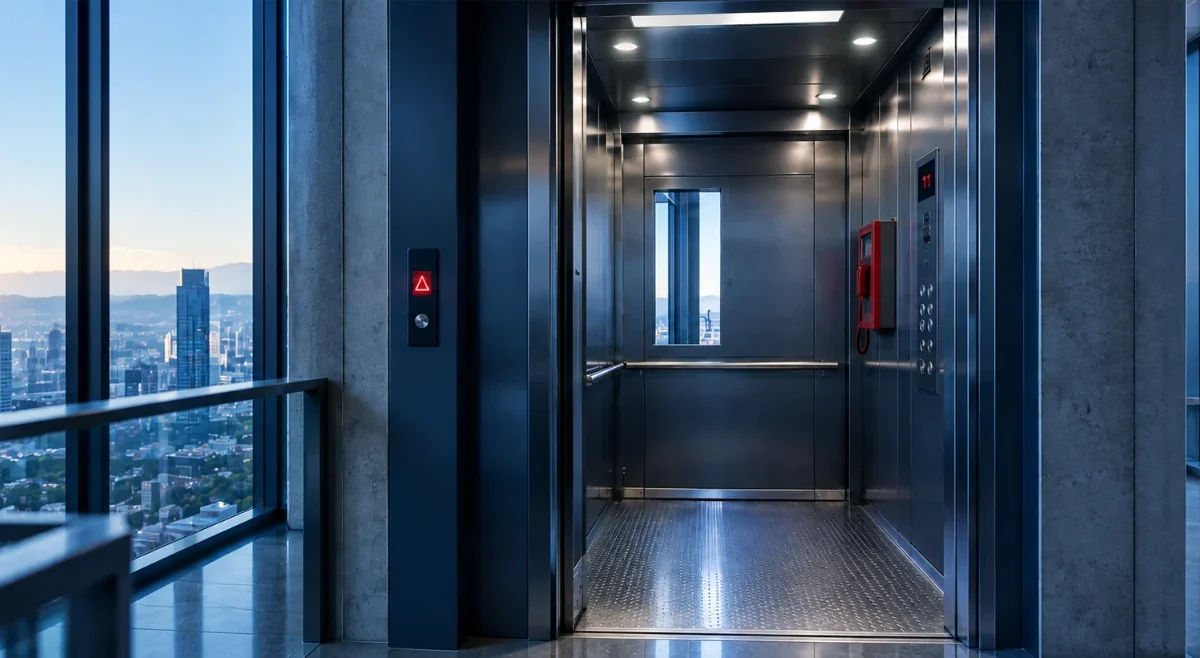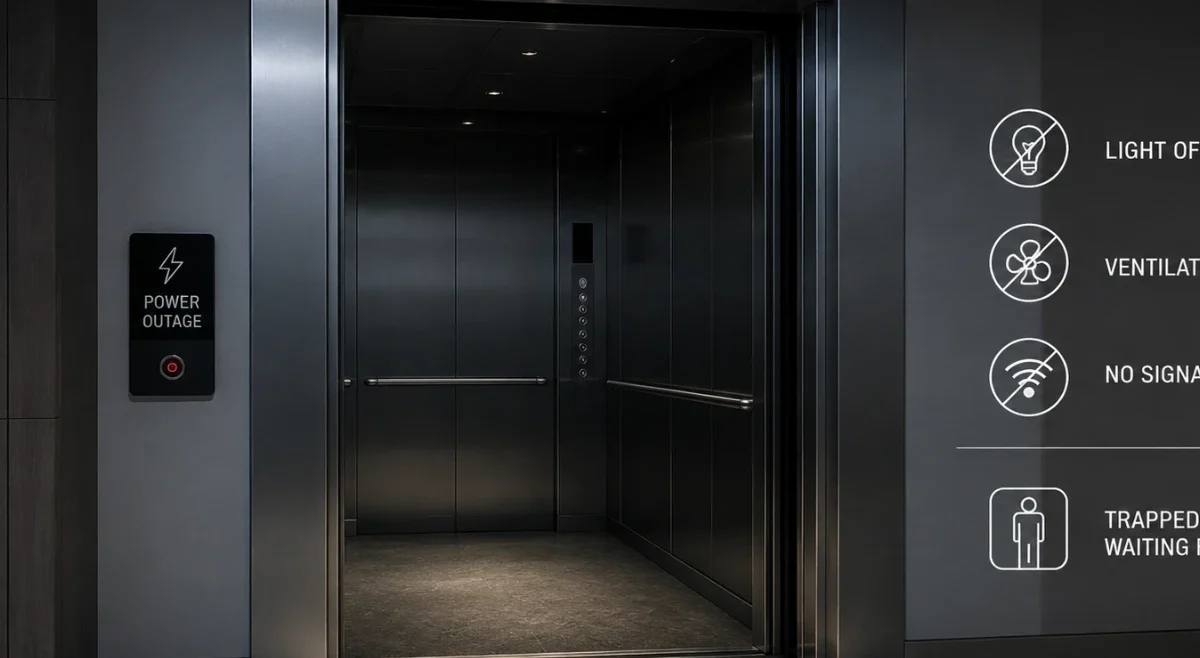
An elevator stopped between floors, darkness, and the feeling of a lack of air — this situation can trigger an instinctive fear of being trapped in a confined space in many people. In reality, many of these sensations are psychological. However, unclear information about what happens inside an elevator in such circumstances and what a person should do can intensify these feelings.
What happens after a power outage depends primarily on the elevator’s configuration, specifically whether it is equipped with an ARD or UPS system. In this blog, we explain how both systems work, how they differ from each other, and, most importantly, how to act in an elevator during an emergency.
The Power Goes Out — Under What Circumstances Does an Elevator Stop?
Without an ARD (Automatic Rescue Device), a power outage can result in the elevator stopping between floors. The doors do not open, the lights go out, and ventilation stops. In this case, the passenger waits for an operator or technical team to arrive, which can take 30–60 minutes. At night, on weekends, or during hours when the building is practically empty, this wait can be even longer.
The situation develops differently in an elevator equipped with ARD. Within seconds of a power outage, the system switches to battery power. A battery or supercapacitor temporarily supplies power to the elevator’s three main components — the motor, door mechanism, and control system. The car gradually travels at a low speed to the nearest floor, and the doors open automatically. The passenger can exit the car without waiting. During this process, ARD also maintains the elevator’s emergency signal and cabin lighting, significantly reducing the likelihood of panic.
UPS — A Different System with a Different Purpose
UPS (Uninterruptible Power Supply), or an uninterrupted power supply system, operates according to a different principle. The elevator uses ARD for one specific purpose — taking passengers to the nearest floor. UPS, on the other hand, keeps the elevator operating in full working mode even after a power outage, as if the interruption had not occurred at all.
It switches from grid power to battery power at 0.3–10 m/second — the elevator practically does not feel this interval. The system maintains full lighting, ventilation, and intercom operation. This is particularly important in hospitals, hotels, and facilities where any elevator interruption can cause serious problems. In a hospital or shopping center, where dozens of people use elevators, even a stoppage of several minutes can become an operational problem.
In addition, UPS protects the system from voltage disruptions in the electrical grid. 68% of failures of elevator electronic components result specifically from unstable grid operation. From this perspective as well, a UPS system contributes to the long-term stability of the system.
ARD and UPS — Used Together?
These two systems are not mutually exclusive. ARD is primarily used in residential and commercial buildings where the main priority is getting passengers out of the elevator. UPS is used where it is critically important for the elevator to continue operating after a power outage. For high-rise or heavily used buildings, using both simultaneously is the most reliable combination — ARD ensures passenger evacuation, while UPS ensures continuous system operation.
How to Act in an Elevator During an Emergency
The most common mistake is attempting to force the doors open. The car may not be precisely aligned with the floor, and opening the doors manually can cause technical damage to the system and make the situation even more difficult. Attempting to exit through the roof hatch is also not recommended — this should only be considered in an extreme, life-threatening situation.
Every passenger elevator has an emergency signal button. It notifies the operator or technical service about the problem. If the button does not work, shouting loudly or knocking on the doors is the only way to attract the attention of people nearby. The feeling of a lack of air in this situation is also primarily psychological: even without ventilation, a normally sized elevator car contains a sufficient supply of air. In an elevator equipped with ARD, the car reaches the nearest floor within seconds, so the best course of action is to remain calm, use the emergency signal, and wait for the elevator’s operation to be restored.
ARD Malfunctions Are Not Normally Visible Under Regular Conditions
The absence or malfunction of ARD is not noticeable during everyday operation. The system activates only in an emergency. For this reason, battery aging or malfunction often goes undetected in time. Problems of this type are identified only during scheduled technical inspections. That is why regular servicing is an integral part of elevator maintenance.
For an elevator owner, inspection is not merely a technical obligation. Resolution No. 289 currently in force in Georgia requires a licensed body to inspect the system once every three years. In the event of a faulty ARD, any incident is considered a violation of the owner’s “Duty of Care.” First and foremost, this represents legal responsibility for the safety of people in the building.
CLC Elevator offers customers consultations regarding the installation, servicing, and condition assessment of ARD and UPS systems.
Our technical team will assess the actual condition of the equipment on-site and provide you with specific recommendations.