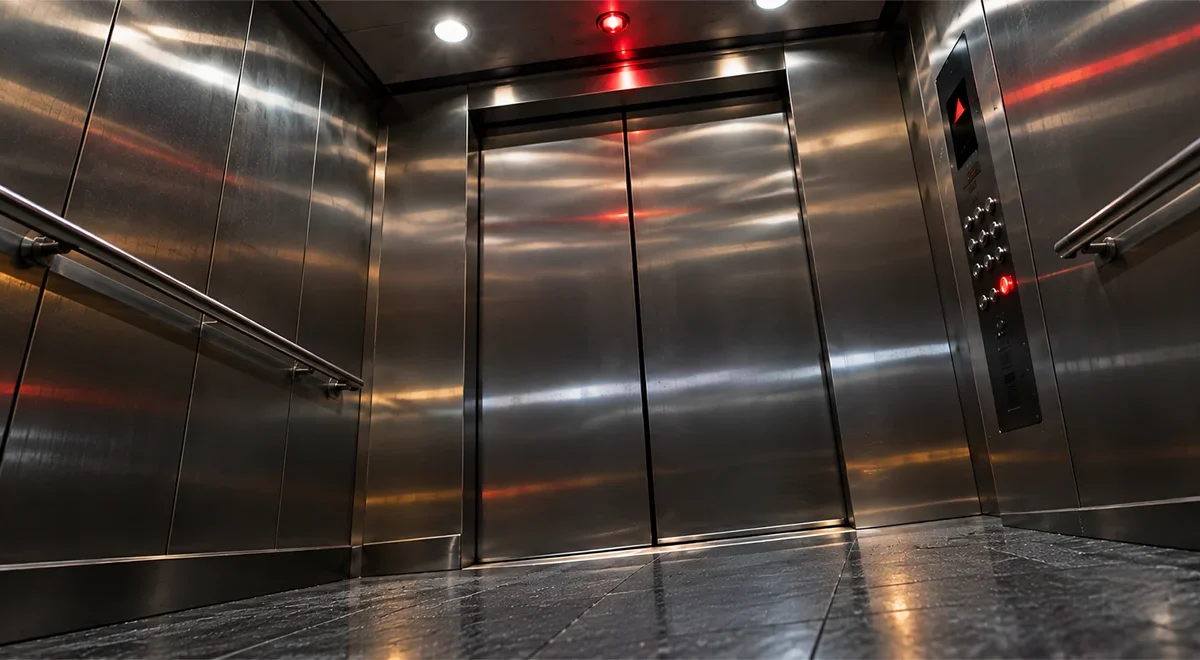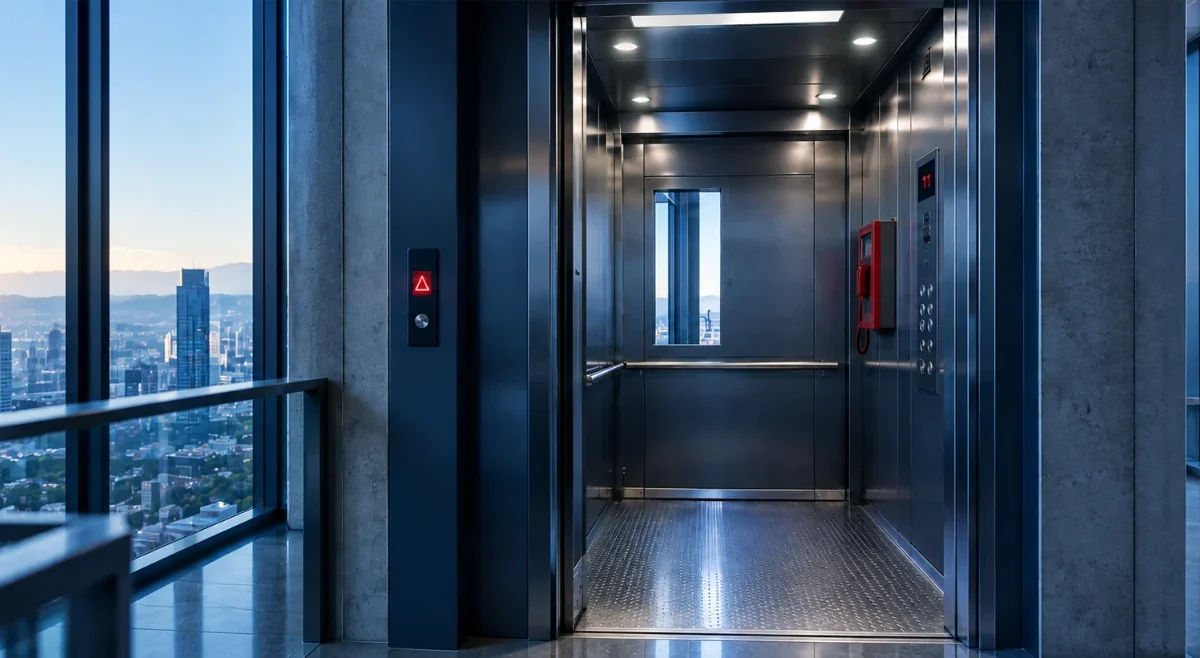
When stepping into an elevator, most people rarely pay conscious attention to the mirror on the wall. We seldom stop to think about why this design element is practically omnipresent across the globe. Yet, its inclusion is far from accidental. In this guide, CLC Elevator explores the fascinating history and functional science behind elevator mirrors.
The Problem Engineers Couldn’t Solve
In the mid-20th century, tenants in a prominent New York City high-rise began lodging frequent complaints. The building’s elevators moved too slowly, resulting in frustratingly long wait times during daily commutes. The situation escalated to the point where several corporate tenants threatened to terminate their lease agreements.
Faced with a crisis, the building management hired a team of mechanical engineers. After auditing the infrastructure, the engineers arrived at the same definitive conclusion: given the building’s structural age, mechanically accelerating the vertical transit speed was either technically impossible or economically unviable. The issue, from their engineering perspective, was unsolvable.
It was during a critical boardroom meeting that a newly appointed corporate psychologist asked a pivotal question: “Is the elevator actually slow, or do people simply perceive it that way?”
The Gap Between Fact and Perception
The psychologist’s observation was simple yet profoundly accurate. When standing inside an elevator, a passenger is completely idle; the surroundings are uniform, and there is nothing to distract the mind. Under these conditions of sensory deprivation, time feels as though it passes much slower—a well-documented psychological phenomenon.
The core issue was not the physical velocity of the elevator car, but the subjective perception of waiting. The building owner did not need a faster motor; they needed to reshape the passenger experience.
This realization made the mirror the ideal solution. Installing mirrors was a remarkably fast, cost-effective modification that yielded immediate psychological results. Instead of staring at blank walls, passengers began checking their appearance, adjusting their clothes, and subtly observing their fellow commuters. Complaints plummeted immediately. In fact, some occupants were under the illusion that the elevator’s mechanical speed had been upgraded, expressing explicit gratitude to the management.
If you are planning to select a new elevator system for your development project, consulting the experienced team at CLC Elevator ensures you secure a tailored, professionally engineered solution designed around human centricity.
Beyond Psychology: The Tangible Benefits of Elevator Mirrors
Over the decades, the mirror transitioned from a clever psychological hack into a standard industrial component. Beyond the initial logic of distraction, several critical, highly practical functions emerged:
Combating Claustrophobia and Spatial Constraint: An elevator is, by definition, a confined, enclosed environment. For individuals prone to claustrophobia, this setting triggers immediate anxiety. A mirror visually doubles the perceived depth of the cabin. Because the human nervous system relies heavily on visual cues, this illusion of an “open” space significantly mitigates environmental stress.
Enhanced Situational Awareness and Safety: Mirrors eliminate blind spots within the car. A passenger entering the cabin can instantly see who is standing beside or behind them without turning around. This subtle detail serves as an important security feature, whether the elevator is overcrowded or an individual is riding alone at night.
Universal Accessibility and Mobility: One of the most critical, code-mandated functions of the elevator mirror relates directly to wheelchair users. Because elevator cabins are often narrow, turning a wheelchair around inside the car is frequently impossible. A mirror installed on the rear wall functions exactly like a vehicle’s rearview mirror: it allows a wheelchair user to safely back out of the cabin, providing visibility to see where they are steering, who is standing outside the landing doors, and whether they have sufficient clearance to maneuver.
For this precise reason, installing mirrors in elevators became a strict regulatory standard in Japan decades ago. Accessibility, rather than aesthetics, served as the primary catalyst for legislation.
One Solution for Multiple Challenges
The evolution of the elevator mirror is a prime example of how reframing a technical problem can lead to entirely different, innovative strategies. While mechanical engineers focused strictly on speed, the psychologist focused on the human experience.
The synergy between these two distinct approaches remains highly visible in modern vertical transportation design today. A premium elevator system must complement mechanical precision with human psychology. Velocity, spatial acoustics, cabin lighting, vibrations, and mirrors work in tandem to establish a profound sense of safety and reliability.
This exact philosophy anchors the product portfolio of CLC Elevator. As a premier supplier of premium passenger and freight lifts across the Georgian market, the company offers state-of-the-art equipment from FUJISJ. Backed by over a century of manufacturing heritage, FUJISJ masterfully balances industrial reliability with uncompromising ride comfort.
An elevator is ultimately a complex mechanical system—but every single component within it has been carefully engineered to elevate the human experience.